

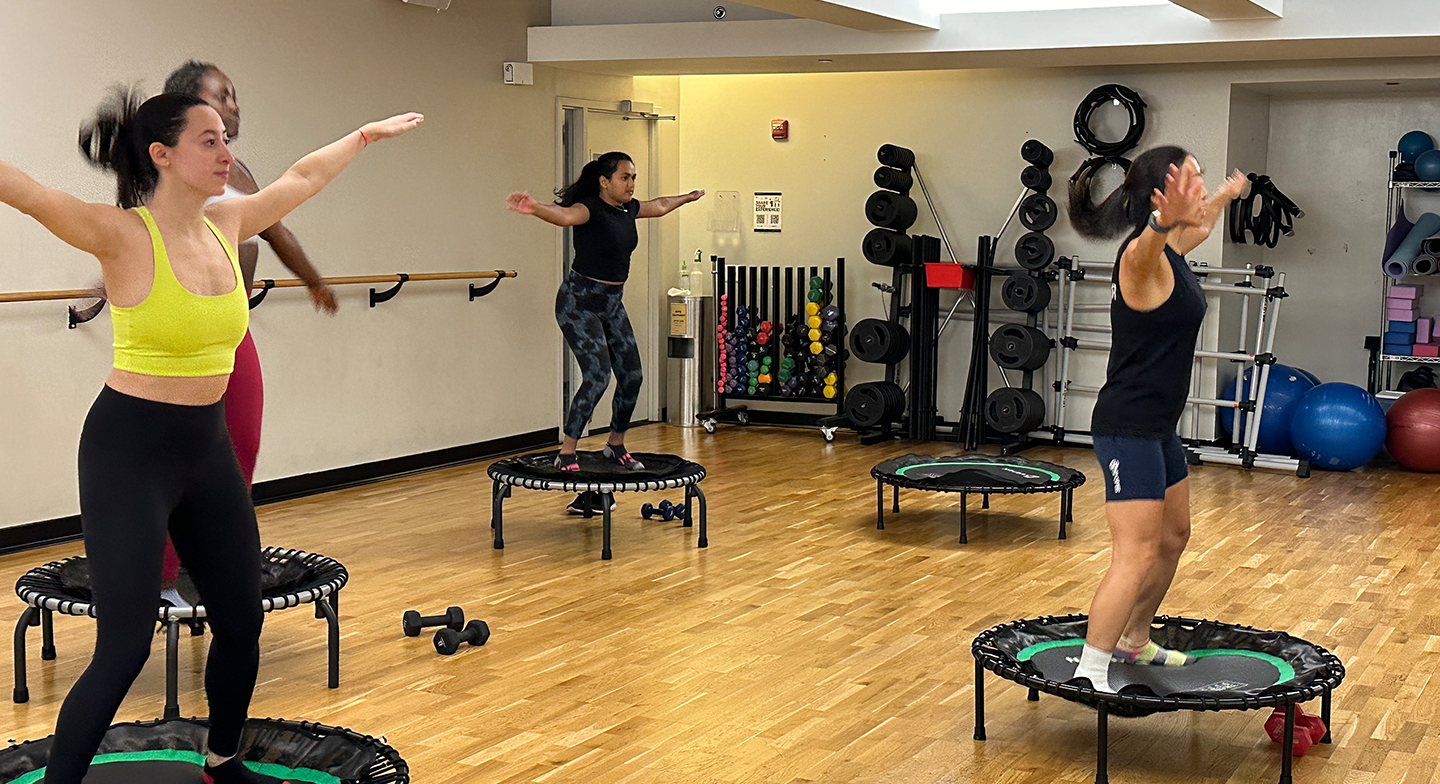
A smartwatch can record a treadmill session with convincing precision and then produce puzzling data during repeated rebounding. That does not necessarily mean the class was ineffective or the device is defective. In a trampoline class Singapore workout, rhythmic wrist movement, changing sensor contact, sweat and rapid arm patterns can interfere with the optical signal used by many consumer wearables.
The practical mistake is to treat one unstable heart-rate trace as an objective verdict on the session. Wearable data is most useful when its limitations are understood and when it is compared with cadence, perceived exertion, recovery and technique quality. A noisy measurement should be interpreted, not obeyed.
How Wrist-Based Optical Heart-Rate Sensors Work
Most wrist wearables estimate heart rate using photoplethysmography, commonly shortened to PPG. Light from the device enters the skin, and the sensor detects changes associated with blood volume pulses. An algorithm converts that signal into an estimated heart rate.
The method can work well when contact is stable and movement is predictable. Exercise complicates the signal. The watch can shift against the skin, wrist angle can change, and repetitive movement can create patterns that compete with the pulse waveform.
Research on wrist PPG during heavy exercise describes motion artefacts as a major challenge for accurate heart-rate estimation. The problem is not unique to trampolining, but rebound classes combine several conditions that can make the challenge more visible.
Repetitive Motion Can Resemble a Heart-Rate Pattern
Trampoline choreography often produces regular arm swings at a tempo linked to the music. The wrist may move at a frequency that is close to the true pulse rate or one of its mathematical harmonics. The algorithm must separate movement-driven signal changes from cardiovascular pulses.
Sometimes it does not separate them successfully. The recorded heart rate may lock onto cadence, remain unusually flat during a hard interval or jump suddenly without a matching change in breathing. This is often called cadence lock in other rhythmic activities, although the exact behaviour depends on the device and algorithm.
A participant should become suspicious when the number conflicts with several other observations. If breathing is controlled, conversation is possible and movement feels moderate, an abrupt extreme reading may be artefact. If perceived effort is very high and the watch remains unexpectedly low, the sensor may also be losing the signal.
Changing Wrist Contact Makes the Signal Less Stable
A watch that is loose enough to slide during each bounce will collect a less consistent optical signal. Sweat, lotion, hair, tattoos, skin characteristics and ambient conditions can also affect performance. None of these factors means the device is unusable. They explain why accuracy varies between people and activities.
The wrist itself changes shape as the hand opens, closes or bends. Large arm drives, punches and overhead patterns alter pressure between the sensor and skin. If the class includes gripping a support or changing hand position, contact may change again.
Fit should be secure without being painfully tight. The sensor generally performs better when positioned slightly above the wrist bone rather than directly on a highly mobile joint. Manufacturer guidance should be followed because device designs differ.
Heart Rate Naturally Lags Behind Short Intervals
Not every confusing trace is a sensor failure. Heart rate takes time to respond when work suddenly increases. A brief high-cadence interval may end before the cardiovascular response peaks. During the recovery phase, the reading may continue rising even though movement intensity has decreased.
This lag becomes important in music-driven classes with frequent changes. Participants may expect the graph to mirror every song transition, but physiological response is smoother and delayed. Trying to force the display upward during a short interval can lead to unnecessary intensity.
The most useful interpretation considers interval length. Heart rate is better suited to describing sustained cardiovascular response than grading every ten-second change in choreography.
Calorie Estimates Add Another Layer of Uncertainty
Wearable calorie numbers are estimates based on heart rate, personal profile information and proprietary algorithms. If the heart-rate input is noisy, the calorie output can inherit that error. Even with accurate heart rate, the estimate may not capture the muscular and coordination demands of a specific movement pattern.
Comparing calorie totals between devices is especially unhelpful because algorithms differ. A firmware update can change an estimate without any change in the participant’s fitness. The number may be useful for observing a broad personal pattern on the same device, but it should not determine whether a session “counted.”
Calorie chasing can also distort technique. Increasing bounce height solely to push the watch reading higher may reduce landing control. The training objective should guide movement, not the desire to produce a larger summary screen.
Perceived Exertion Provides Essential Context
A one-to-ten rating of perceived exertion is simple, but it captures information the watch cannot see. It reflects breathing, muscular fatigue, heat, coordination and the participant’s overall sense of effort.
The rating becomes more useful when separated into components. Record cardiovascular effort, lower-leg fatigue and coordination demand. A session might feel like seven out of ten for breathing, eight for calves and five for coordination. Another class with the same average heart rate may create a completely different profile.
Perceived exertion is subjective, which is not the same as meaningless. Repeated under similar conditions, it helps identify personal patterns. If the same class format requires lower perceived effort at a comparable cadence while technique remains stable, fitness or efficiency may be improving even when the device summary changes little.
Technique Quality Is a Performance Metric
Wearables measure what their sensors can detect, not everything that matters. They cannot reliably tell whether landings remained centred, whether the participant reduced unnecessary arm corrections or whether directional transitions became smoother.
Choose one observable technique marker for the session. It could be maintaining position during lateral rebounds, completing a fast sequence without extra recovery bounces, or keeping the trunk controlled during large arm patterns. After class, record whether that marker was achieved early, throughout or only intermittently.
This creates a metric linked directly to the skill being trained. It also prevents an inaccurate heart-rate reading from overshadowing genuine movement progress.
Cadence and Completed Work Provide a Stable External Measure
When class choreography is repeated, participants can note whether they maintained the instructed cadence, which movement option they used and how many work intervals were completed with stable form. These external measures describe what was done.
Heart rate and perceived exertion describe the internal response. Both sides are needed. Maintaining the same cadence at lower perceived exertion can suggest improved tolerance. Using a larger range at the same cadence while landing quality remains stable can show progression. Completing more intervals only matters if the added work does not come from deteriorating technique.
The objective is not to build a complex spreadsheet for every class. Two or three consistent observations are enough to create a useful history.
Recovery Metrics Matter After the Watch Stops
The device summary ends when the workout is saved, but the training response continues. Note how quickly breathing settles, whether normal energy returns, how the lower legs feel later in the day and whether the next planned session is performed well.
Sleep and resting heart-rate trends can provide context, but they should not become automatic commands. Consumer recovery scores combine multiple estimates and may respond to factors unrelated to training. Use them as prompts to observe, not as permission slips.
A pattern across several days is more meaningful than one unusual score. If subjective fatigue, performance and wearable trends all deteriorate together, reducing load may be sensible. If the watch reports poor recovery but the participant feels normal and performs well, the score deserves less authority.
When More Accurate Heart-Rate Data Is Needed
Some participants train for goals that require closer heart-rate monitoring. A compatible chest strap may provide a more stable electrical heart-rate signal during vigorous arm movement, although comfort and device setup still matter. It is not necessary for everyone attending a general fitness class.
People who use heart-rate monitoring for a medical reason should follow guidance from their healthcare professional rather than relying on generic wearable advice. A consumer watch is not a substitute for clinical assessment, particularly when symptoms such as chest pain, faintness or unusual breathlessness occur.
For ordinary class tracking, consistency of method is often more valuable than purchasing another device. Wear the watch in the same position, use the correct activity mode and compare similar sessions rather than unrelated workout types.
Build a Better Trampoline Class Dashboard
A useful post-class record can contain five items: class format, perceived cardiovascular effort, local muscular fatigue, one technique marker and next-day recovery. Heart rate can be added when the trace appears credible.
Members exploring xBounce sessions through TFX Singapore can use this compact dashboard to compare cardio-focused and strength-interval formats without assuming that the highest wearable number identifies the best session. The desired outcome may be improved rhythm, stronger interval tolerance or better recovery rather than a new calorie record.
Let Data Support Coaching, Not Replace It
Wearables are valuable because they make invisible patterns easier to review. They become less useful when noisy heart-rate data overrides breathing, technique and instructor feedback.
During trampoline exercise, repeated wrist motion and changing contact can distort PPG readings. Heart-rate lag and calorie algorithms add further uncertainty. Interpret the device within a wider set of measures: cadence, perceived exertion, completed quality work and recovery. The best metric is the one that helps make the next training decision more accurate.
Frequently Asked Questions
Why does my watch show a sudden heart-rate spike during arm movements?
The sensor may be responding to motion artefact or changing skin contact. Compare the reading with breathing, perceived exertion and whether the watch shifted during the sequence.
Should I tighten my watch for class?
It should be secure enough to limit sliding but not painfully tight. Follow the manufacturer’s positioning instructions and consider wearing it slightly above the wrist bone.
Is a chest strap always better?
A chest strap often provides more stable heart-rate data during vigorous movement, but it is not essential for general class participation. Choose it when accurate heart-rate monitoring serves a clear training or medical purpose.
Which metric should I record after every class?
Start with perceived exertion and one technique marker. Add credible heart-rate data, class cadence and next-day recovery when they help answer a specific training question.